সর্বশেষ যাচাই: ১১ অক্টোবর ২০২৬ · লেখক: Notout Team
পুরো গাইড: বাংলাদেশ সময়ে খেলার সূচি ও ফলাফল
Top IPL Betting Markets:
- Match Winner: Predict which team will win the match
- Top Batsman: Bet on the highest run-scorer in the match
- Total Runs: Over/under on total runs scored
- Tournament Winner: Long-term bet on the IPL champion
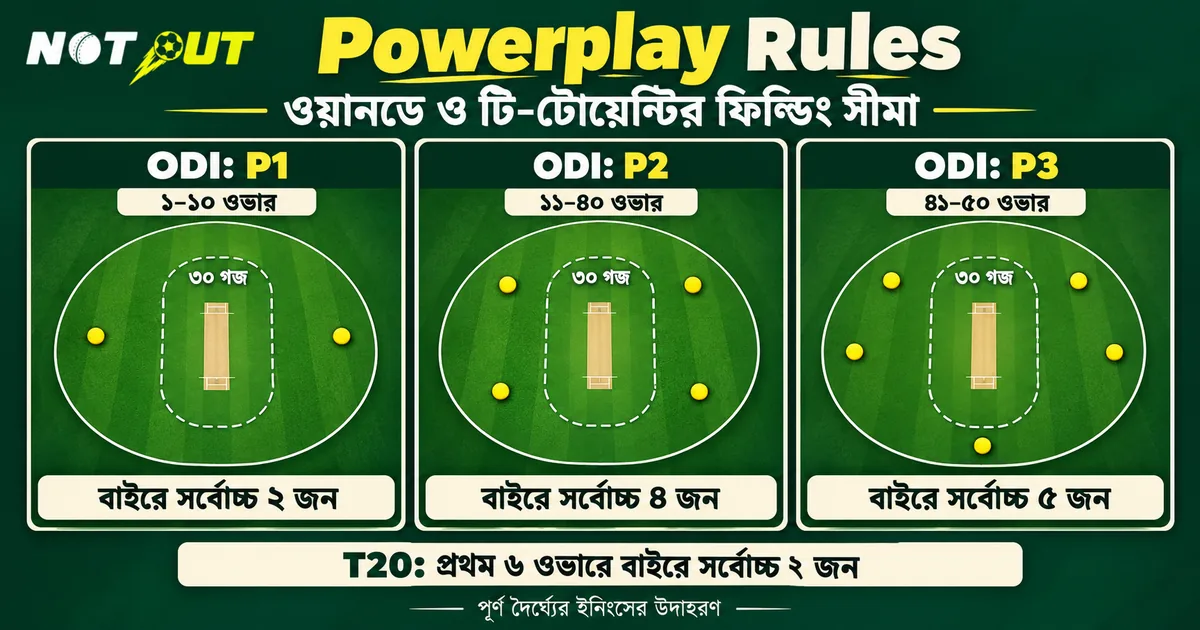
ওয়ানডের দশম ওভারে বৃত্তের বাইরে মাত্র দুজন ফিল্ডার রাখা যায়। এক বল পরে, ১১তম ওভারে, সংখ্যাটা হয়ে যায় চার। ক্রিকেটের powerplay rules মূলত এই ফিল্ডার-গোনার নিয়ম। কোন ওভারে বৃত্তের বাইরে সর্বোচ্চ কতজন দাঁড়াতে পারবেন, সেটাই ঠিক করে দেয় পাওয়ারপ্লে।
নিচের সব তথ্য আইসিসির পুরুষদের ওয়ানডে ও টি-টোয়েন্টি আন্তর্জাতিক প্লেয়িং কন্ডিশনস থেকে মিলিয়ে নেওয়া, যার সর্বশেষ সংস্করণ অক্টোবর ২০২৬ থেকে কার্যকর। ঘরোয়া লিগ বা নারী ক্রিকেটে নিয়ম আলাদা হতে পারে। ক্রিকেটের আরও ব্যাখ্যা পাবেন Notout BD হোমপেজে।
Powerplay rules এক টেবিলে
পুরো ইনিংস খেলা হলে আন্তর্জাতিক পুরুষ ক্রিকেটে ফিল্ডিং সীমা এমন:
| ফরম্যাট | ধাপ | ওভার | বৃত্তের বাইরে সর্বোচ্চ ফিল্ডার |
|---|---|---|---|
| ওয়ানডে | পাওয়ারপ্লে ১ (P1) | ১–১০ | ২ জন |
| ওয়ানডে | পাওয়ারপ্লে ২ (P2) | ১১–৪০ | ৪ জন |
| ওয়ানডে | পাওয়ারপ্লে ৩ (P3) | ৪১–৫০ | ৫ জন |
| টি-টোয়েন্টি | পাওয়ারপ্লে | ১–৬ | ২ জন |
| টি-টোয়েন্টি | পাওয়ারপ্লের পরে | ৭–২০ | ৫ জন |
গোনা হয় বোলার বল ছাড়ার মুহূর্তে। বল ডেলিভারির আগে কেউ বৃত্তের ভেতর থেকে বাইরে সরে থাকলে সেটাও গোনায় ধরা হয়।
বৃত্তটা আসলে কী
পিচের দুই প্রান্তের মিডল স্টাম্পকে কেন্দ্র ধরে ৩০ গজ (২৭.৪৩ মিটার) ব্যাসার্ধের দুটি অর্ধবৃত্ত আঁকা হয়। দুটি সমান্তরাল সরলরেখা অর্ধবৃত্ত দুটিকে জোড়া দেয়। মাঠে তাই এটাকে ডিম্বাকার রিং মনে হয়।
রিংটা সাদা রং দিয়ে টানা লাইনে আঁকা যায়। আবার পাঁচ গজ পরপর সাদা চাকতি বসিয়েও চিহ্নিত করা যায়। টিভিতে যে সাদা বিন্দুর সারি দেখেন, সেগুলো এই চাকতি।
ওয়ানডেতে তিন ধাপ: P1, P2, P3
অনেকেই জানতে চান, ওয়ানডেতে পাওয়ারপ্লে কয়টি। উত্তর: তিনটি। আইসিসির ওয়ানডে প্লেয়িং কন্ডিশনসের ২৮.৭ ধারায় এগুলোকে Powerplay 1, 2 ও 3 বলা হয়েছে।
পাওয়ারপ্লে ১: প্রথম দশ ওভার
বৃত্তের বাইরে সর্বোচ্চ দুজন। নতুন বল, ফাঁকা সীমানা। ওপেনাররা মাথার ওপর দিয়ে খেলার সুযোগ পান। আবার নতুন বলে সুইং থাকলে বোলাররা স্লিপে লোক রেখে উইকেটের খোঁজ করেন।
পাওয়ারপ্লে ২: ১১ থেকে ৪০ ওভার
এই ধাপকেই অনেকে 2nd powerplay ODI বলে খোঁজেন। বাইরে সর্বোচ্চ চারজন রাখা যায়। ত্রিশ ওভারের লম্বা মাঝের অংশে সাধারণত স্পিনাররা বেশি বল করেন। ব্যাটাররা স্ট্রাইক বদলে জুটি গড়েন।
পাওয়ারপ্লে ৩: শেষ দশ ওভার
বাইরে সর্বোচ্চ পাঁচজন। ব্যাটিং দল তখন দ্রুত রান তুলতে চায়। কিন্তু সীমানায় বেশি পাহারা থাকায় শুধু জোরে মারলেই চলে না, ফাঁক খুঁজতে হয়।
মাঝের ও শেষ ধাপ শুরু হলে আম্পায়ার হাত বড় বৃত্তে ঘুরিয়ে স্কোরারদের সংকেত দেন। স্কোরবোর্ডেও চলতি পাওয়ারপ্লে দেখানোর কথা।
টি-টোয়েন্টির powerplay rules: ছয় ওভার, দুই ফিল্ডার
টি-টোয়েন্টি আন্তর্জাতিকে পাওয়ারপ্লে একটাই। প্রথম ছয় ওভারে বৃত্তের বাইরে সর্বোচ্চ দুজন। সপ্তম ওভার থেকে বাকি ইনিংসে সর্বোচ্চ পাঁচজন।
কুড়ি ওভারের খেলায় ছয় ওভার মানে ইনিংসের প্রায় ৩০ শতাংশ। এই সময়ে তোলা রান প্রায়ই পুরো ইনিংসের ভিত গড়ে দেয়। সাম্প্রতিক টি-টোয়েন্টি ম্যাচের সময়সূচি দেখতে পারেন আমাদের বাংলাদেশ বনাম জিম্বাবুয়ে টি-টোয়েন্টি সিরিজের পাতায়।
বৃষ্টিতে ওভার কমলে টি-টোয়েন্টির নতুন হিসাব
এই অংশে ২০২৫ সালে বড় বদল এসেছে। আগে ছোট ইনিংসের পাওয়ারপ্লে পূর্ণ ওভারে গোনা হত। জুন ২০২৫-এ আইসিসি ঘোষণা দেয়, এখন থেকে হিসাব হবে বল ধরে, যাতে পাওয়ারপ্লে ইনিংসের প্রায় একই অনুপাতে থাকে। ইংল্যান্ডের ঘরোয়া টি-টোয়েন্টি ব্লাস্টে পদ্ধতিটি আগে থেকেই চালু ছিল। বর্তমান প্লেয়িং কন্ডিশনসের ২৮.৭.৬ ধারায় পুরো টেবিলটি আছে:
| ইনিংসের ওভার | পাওয়ারপ্লে | ইনিংসের ওভার | পাওয়ারপ্লে |
|---|---|---|---|
| ৫ | ১.৩ | ১৩ | ৩.৫ |
| ৬ | ১.৫ | ১৪ | ৪.১ |
| ৭ | ২.১ | ১৫ | ৪.৩ |
| ৮ | ২.২ | ১৬ | ৪.৫ |
| ৯ | ২.৪ | ১৭ | ৫.১ |
| ১০ | ৩.০ | ১৮ | ৫.২ |
| ১১ | ৩.২ | ১৯ | ৫.৪ |
| ১২ | ৩.৪ | ২০ (পূর্ণ) | ৬.০ |
এখানে ২.২ মানে দশমিক নয়। এর অর্থ দুই ওভার আর দুই বল, মোট ১৪ বল। আট ওভারের ইনিংসে তাই তৃতীয় ওভারের দুই বল পরেই তিনজন বাড়তি ফিল্ডার সীমানার দিকে যেতে পারেন।
আরেকটি খুঁটিনাটি নিয়ম আছে। ওভারের মাঝে খেলা থামার পর ওভার কমানো হলে, আর নতুন হিসাবে পাওয়ারপ্লের বল আগেই শেষ হয়ে গেলে, ওভারের বাকি বলে আর এই সীমা থাকে না। টি-টোয়েন্টিতে ম্যাচ হতে প্রতিটি দলকে অন্তত পাঁচ ওভার খেলতে হয়, তাই টেবিল পাঁচ থেকে শুরু।
ওয়ানডেতে ওভার কমলে তিন ধাপ কীভাবে ভাগ হয়
ওয়ানডেতে ম্যাচ হতে অন্তত ২০ ওভার লাগে। ইনিংস ছোট হলে তিন ধাপই ছোট হয়, তবে পূর্ণ ওভারে। কয়েকটি সারি:
| ইনিংসের ওভার | P1 | P2 | P3 |
|---|---|---|---|
| ২০ | ৪ | ১২ | ৪ |
| ২৫ | ৫ | ১৫ | ৫ |
| ৩০ | ৬ | ১৮ | ৬ |
| ৩৫ | ৭ | ২১ | ৭ |
| ৪০ | ৮ | ২৪ | ৮ |
| ৪৫ | ৯ | ২৭ | ৯ |
২০ থেকে ৪৯ পর্যন্ত প্রতিটি সংখ্যার সারি আইসিসির ওয়ানডে প্লেয়িং কন্ডিশনস নথিতে আছে। নিয়মটা হলো, খেলা থামার পর নতুন ভাগ সঙ্গে সঙ্গে কার্যকর হয়, ওভারের মাঝে থামলেও।
আইসিসির নিজের উদাহরণ ধরুন। ৫০ ওভারের ইনিংস ৮.৩ ওভারে থেমে ৩২ ওভারে নামল। নতুন ভাগ ৭+১৯+৬। সাত ওভার আগেই পেরিয়ে গেছে, তাই খেলা শুরু হতেই মাঝের ধাপের সীমা চালু হয়। ২৬ ওভার শেষে শুরু হয় শেষ ধাপ।
ওয়ানডে সূচি আর ম্যাচের খবর পাবেন আফগানিস্তান-বাংলাদেশ-জিম্বাবুয়ে ত্রিদেশীয় সিরিজের পাতায়।
নিয়ম ভাঙলে কী হয়
বৃত্তের বাইরে বাড়তি একজন থাকলেই স্কয়ার লেগ আম্পায়ার নো-বল ডাকেন। ব্যাটিং দল এক রান অতিরিক্ত পায়। ফ্রি হিটের নিয়মও প্রযোজ্য হয়, কারণ আন্তর্জাতিক সাদা বলের ক্রিকেটে প্রতিটি নো-বলের পরের বল ফ্রি হিট।
ধীর ওভার রেটের শাস্তিও একই সীমায়
পাওয়ারপ্লের বাইরেও ফিল্ডার-সীমা বদলাতে পারে। নির্ধারিত সময়ের মধ্যে শেষ ওভারের প্রথম বল করার অবস্থানে না থাকলে, বাকি ইনিংসে বৃত্তের বাইরে পাঁচজনের বদলে চারজন রাখা যায়। দুই ফরম্যাটেই এই শাস্তি আছে।
তবে টি-টোয়েন্টিতে ইনিংস ১০ ওভারের কম আর ওয়ানডেতে ২৫ ওভারের কম হয়ে গেলে নিয়মটি খাটে না, যদি না কমানোর আগেই শাস্তি শুরু হয়ে থাকে। শেষ ওভারগুলোতে একজন কম সীমানা-রক্ষী মানে ব্যাটিং দলের জন্য বড় সুবিধা।
পুরোনো নিয়ম যা এখন আর নেই
ইন্টারনেটে এখনো অনেক লেখায় ব্যাটিং পাওয়ারপ্লে বা বোলিং পাওয়ারপ্লের কথা পাওয়া যায়। ২০০৫ সালে ওয়ানডেতে পাওয়ারপ্লে চালু হয়েছিল, পরে কয়েক দফা বদলেছে। এক সময় দল নিজে ঠিক করত কখন পাওয়ারপ্লে নেবে।
এখনকার ওয়ানডেতে সে সুযোগ নেই। তিন ধাপই নির্দিষ্ট ওভারে আপনাআপনি আসে। পুরোনো লেখায় “প্রথম দশ ওভারে দুজন ক্যাচিং ফিল্ডার বাধ্যতামূলক” জাতীয় নিয়মও দেখবেন, যা বর্তমান কন্ডিশনসে নেই। ইতিহাসের সংক্ষিপ্ত বিবরণ আছে উইকিপিডিয়ার পাওয়ারপ্লে নিবন্ধে)।
টেস্ট ও ঘরোয়া লিগে কী নিয়ম
টেস্ট ক্রিকেটে কোনো পাওয়ারপ্লে নেই। বৃত্তের বাইরে ফিল্ডার রাখার এমন সীমাও নেই।
ফ্র্যাঞ্চাইজি লিগগুলো নিজের নিয়ম বানাতে পারে। যেমন অস্ট্রেলিয়ার বিগ ব্যাশ লিগ পাওয়ারপ্লের সঙ্গে নিজস্ব “পাওয়ার সার্জ” ধারণা যোগ করেছে। তাই কোনো লিগের খেলা দেখার আগে সেই আসরের নিজস্ব নিয়ম দেখে নিন।
খেলা দেখার সময় তিনটি জিনিস লক্ষ করুন
- প্রথম ছয় বা দশ ওভারে কতজন ফিল্ডার সীমানায়। দুজনের বেশি দেখলে নিশ্চয়ই কেউ বৃত্তের ভেতরে দাঁড়িয়ে।
- ধাপ বদলের ওভার। ওয়ানডেতে ১১তম ও ৪১তম ওভারের শুরুতে আম্পায়ারের সংকেত দেখুন।
- বৃষ্টির পর স্কোরবোর্ড। নতুন ওভার সংখ্যার সঙ্গে পাওয়ারপ্লের দৈর্ঘ্যও বদলায়।
বাংলাদেশের ব্যাটিং কেন পাওয়ারপ্লের পরে ধীর হয়ে যায়, সেই আলোচনা পাবেন ব্যাটিংয়ে ধারাবাহিকতার সমস্যা নিয়ে আমাদের লেখায়। ছোট সংস্করণে আগ্রাসী শুরুর উদাহরণ দেখতে পড়ুন অভিষেক শর্মার সেরা টি-টোয়েন্টি ইনিংস।
পাওয়ারপ্লে নিয়ে পাঠকের জিজ্ঞাসা
ওয়ানডেতে পাওয়ারপ্লে কয়টি?
তিনটি। P1 ওভার ১–১০ (বাইরে সর্বোচ্চ ২ জন), P2 ওভার ১১–৪০ (৪ জন), P3 ওভার ৪১–৫০ (৫ জন)।
টি-টোয়েন্টিতে পাওয়ারপ্লে কত ওভারের?
পূর্ণ ২০ ওভারের ইনিংসে প্রথম ৬ ওভার, তখন বৃত্তের বাইরে সর্বোচ্চ ২ জন। ইনিংস ছোট হলে বল ধরে হিসাব হয়, যেমন ৮ ওভারে ২.২ ওভার।
পাওয়ারপ্লেতে বাড়তি ফিল্ডার বাইরে থাকলে কী হয়?
স্কয়ার লেগ আম্পায়ার নো-বল ডাকেন। ব্যাটিং দল এক রান অতিরিক্ত পায় এবং পরের বল ফ্রি হিট হয়।
দল কি নিজে পাওয়ারপ্লে বেছে নিতে পারে?
না। বর্তমান আইসিসি নিয়মে ওয়ানডে ও টি-টোয়েন্টি দুই ফরম্যাটেই পাওয়ারপ্লে নির্দিষ্ট ওভারে আপনাআপনি চলে।
টেস্ট ক্রিকেটে কি পাওয়ারপ্লে আছে?
না। টেস্টে বৃত্তের বাইরে ফিল্ডার রাখার এমন কোনো সীমা নেই।
মূল কথা
ওয়ানডেতে ২-৪-৫, টি-টোয়েন্টিতে ২-৫: সংখ্যা দুটো মনে রাখলেই মূল নিয়ম ধরা যায়। বৃষ্টিতে ওভার কমলে মূল নথির টেবিল দেখুন, কারণ ২০২৫ থেকে টি-টোয়েন্টিতে হিসাব হয় বল ধরে। সব ধারা পড়তে চাইলে আইসিসির প্লেয়িং কন্ডিশনস পাতা থেকে পুরুষদের টি-টোয়েন্টি আন্তর্জাতিক প্লেয়িং কন্ডিশনস নামিয়ে নিন।
লেনদেনের আগে এজেন্টের নম্বর মিলিয়ে নিতে পুরো নটআউট মাস্টার এজেন্ট লিস্ট দেখুন।